
In the alleys behind Dongdaemun’s neon glare, a forgotten market and a carved-out hillside reveal Seoul’s quieter, rougher edge.
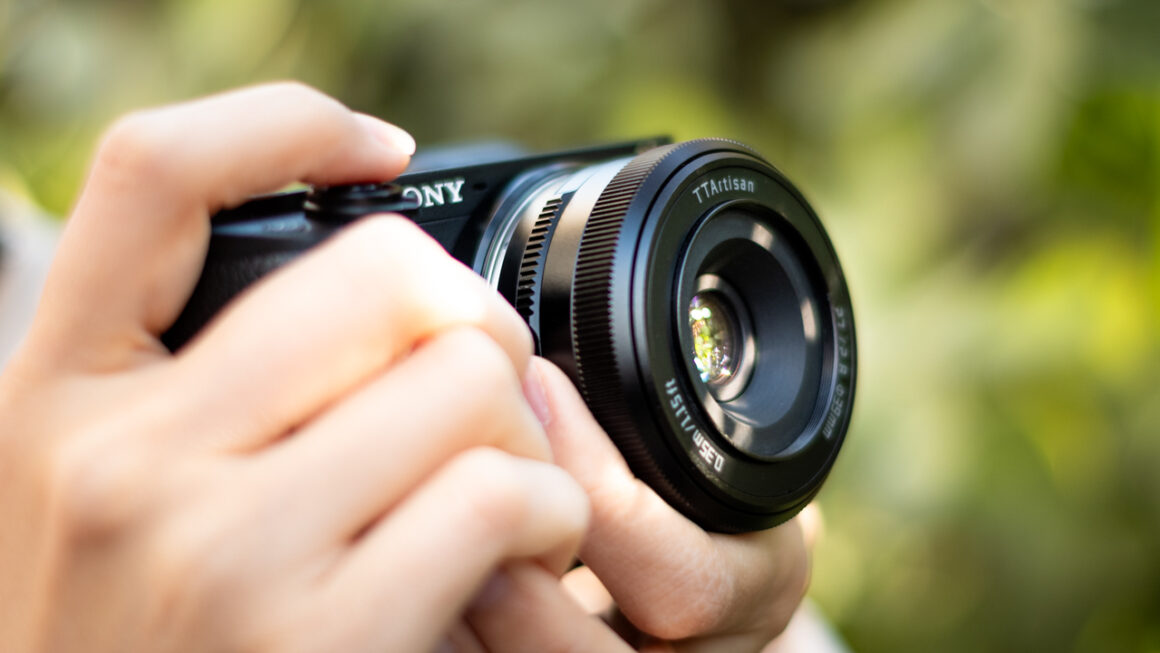
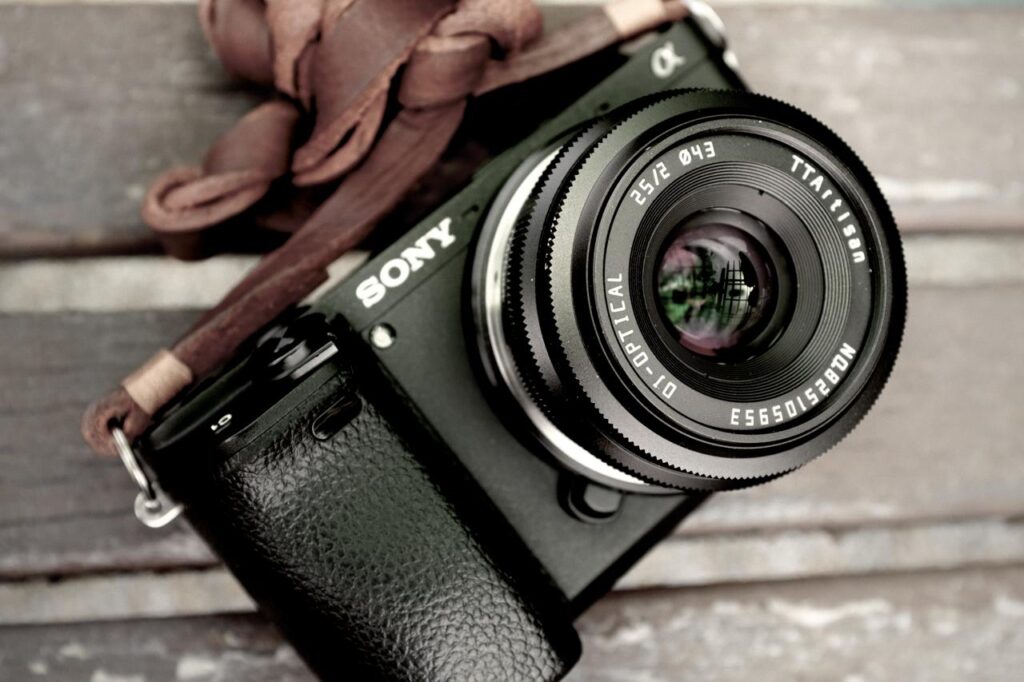
All photos taken with TTartisan 25mm F2 and Sony A6400.
The alley is easy to miss
You could walk past it a hundred times—on your way to the night markets, to the department stores, to the endless fabric towers of Dongdaemun—and never notice the sliver of space between buildings where the concrete narrows and the noise falls away.
There, where the crowd thins and the light turns soft, the city folds inward. And you enter Changsin Alley Market.
A market, barely marked
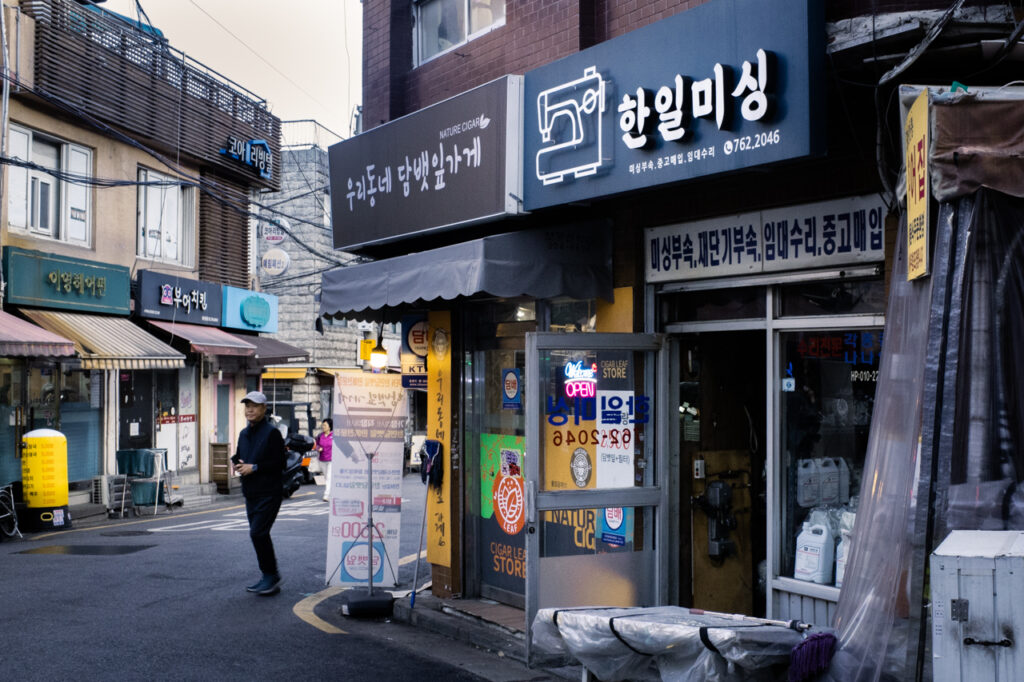
Changsin Alley Market isn’t the kind of place you plan to visit. It’s the kind of place that lives in the pauses of the city—in the seams.
Built in 1969, when the Cheonggyecheon stream was covered and the garment factories moved uphill, the market took shape along the old waterway. Stalls sprouted to serve the seamstresses, the delivery boys, the families who stitched Seoul’s clothes in basement workshops.
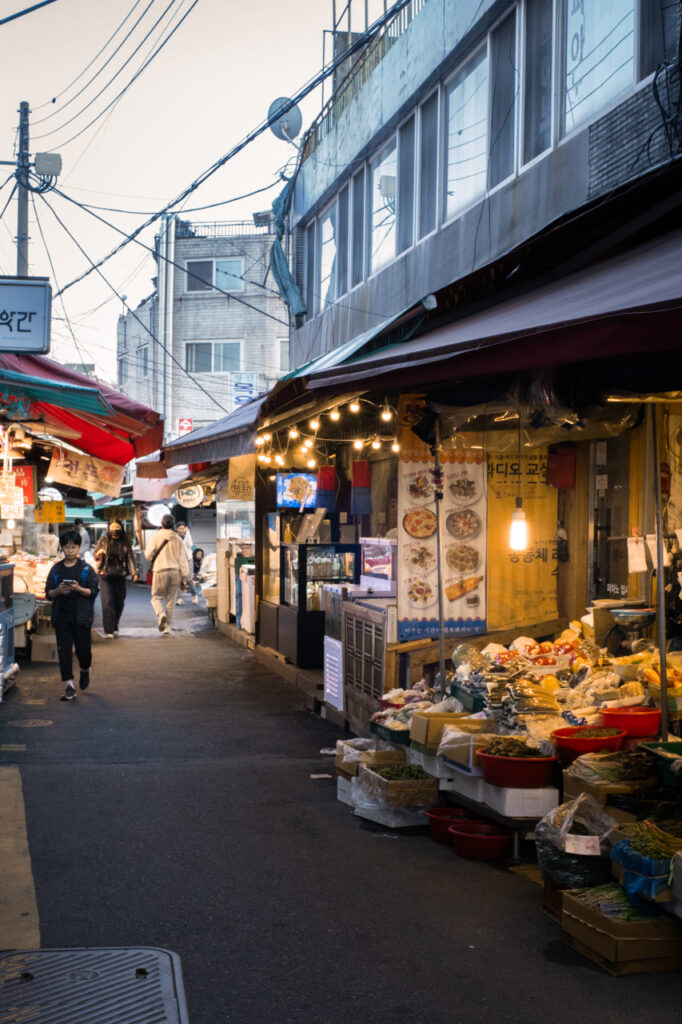
Today, the market remains. Short, crooked, unassuming. A butcher behind a windowed counter. A banchan (Korean side dish) seller arranging her trays like a florist. A hardware and a underwear and an old stack of mops.
It runs just 150 meters from end to end. But within that stretch is an entire world of memory.
The flavor of something unchanged
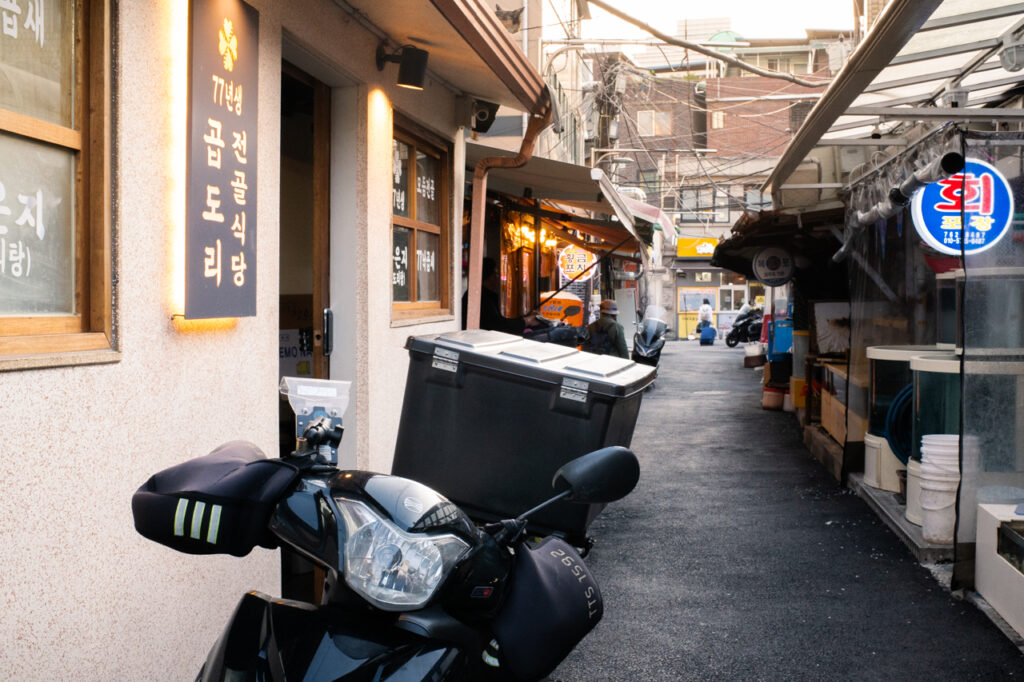
Changsin isn’t picturesque in the way that tourist markets try to be. It doesn’t perform. It continues.
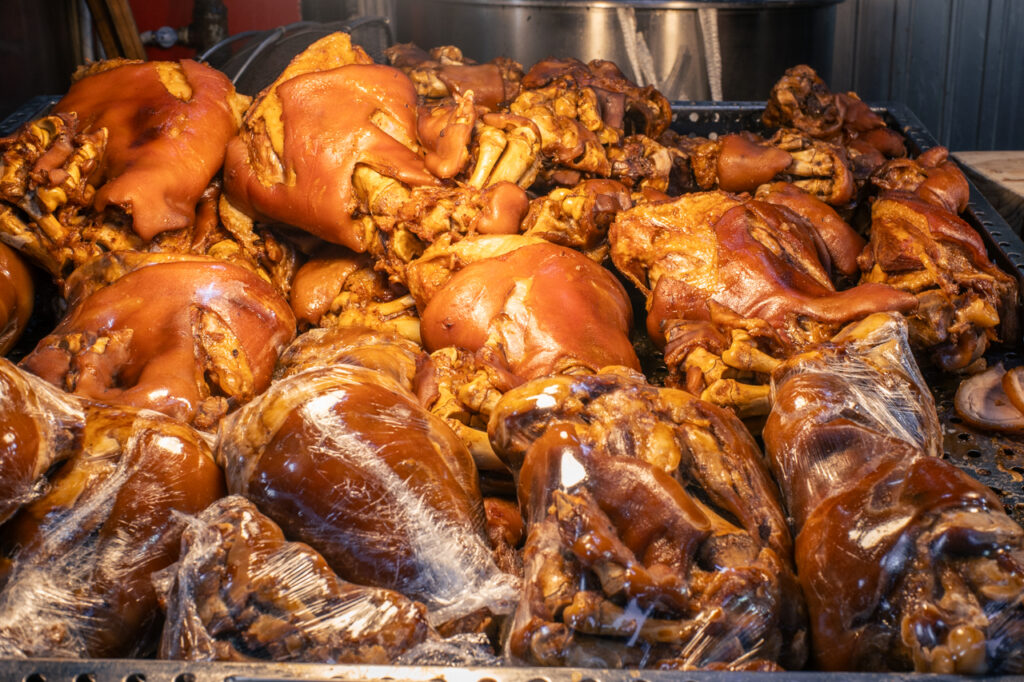
The air smells of frying oil and warm broth. Jokbal glistens in a lacquer of soybean paste. Rice cakes puff in the oil, turning golden before they’re tossed with syrup and sesame. Fishcakes bob in deep steel pots. A radio plays trot from a time you don’t recognize but somehow remember.
Everything here feels worn in—the kind of worn that happens when something is used, loved, and never replaced.
The quarry and the cliff
Step outside the market’s end and the world changes again.
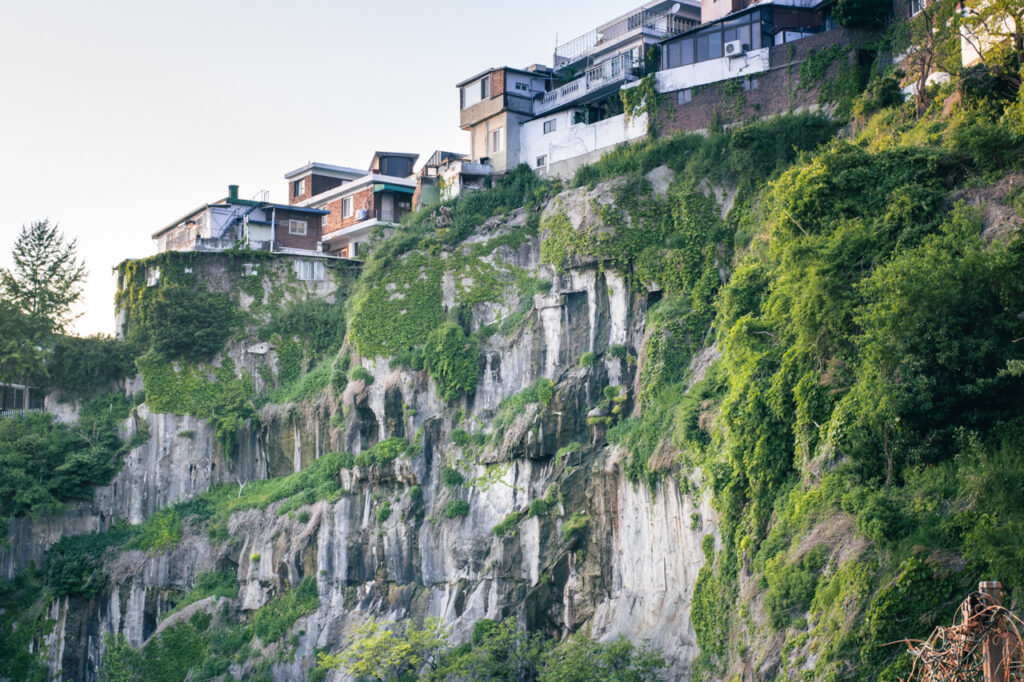
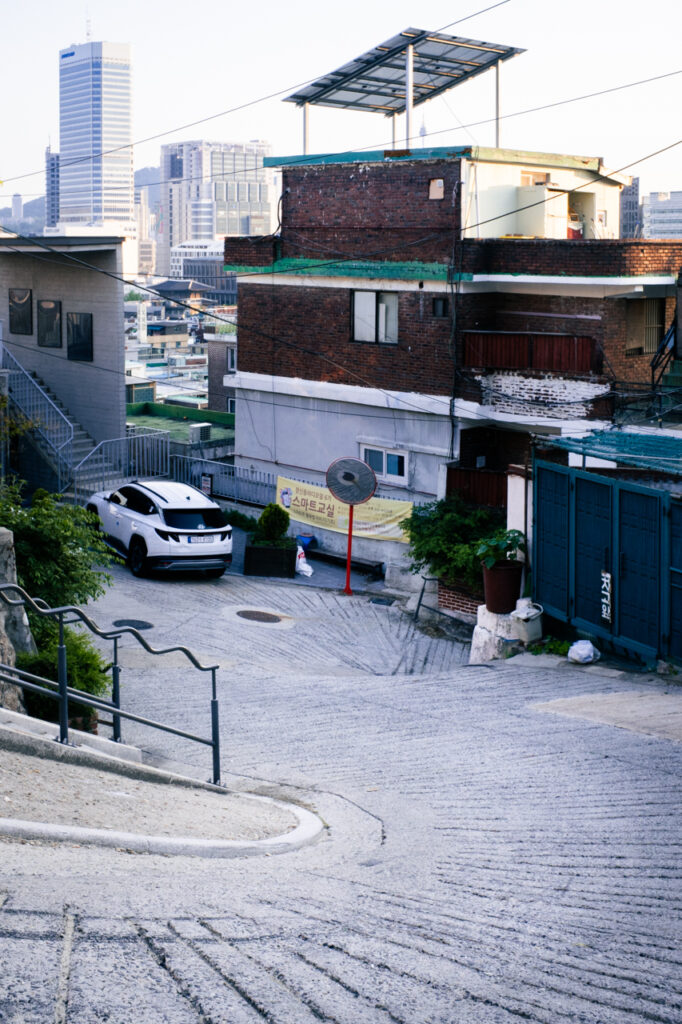
The alley bends. Stairs appear. The city splits open. And there—abrupt and vertical—is the stone face of the old quarry.
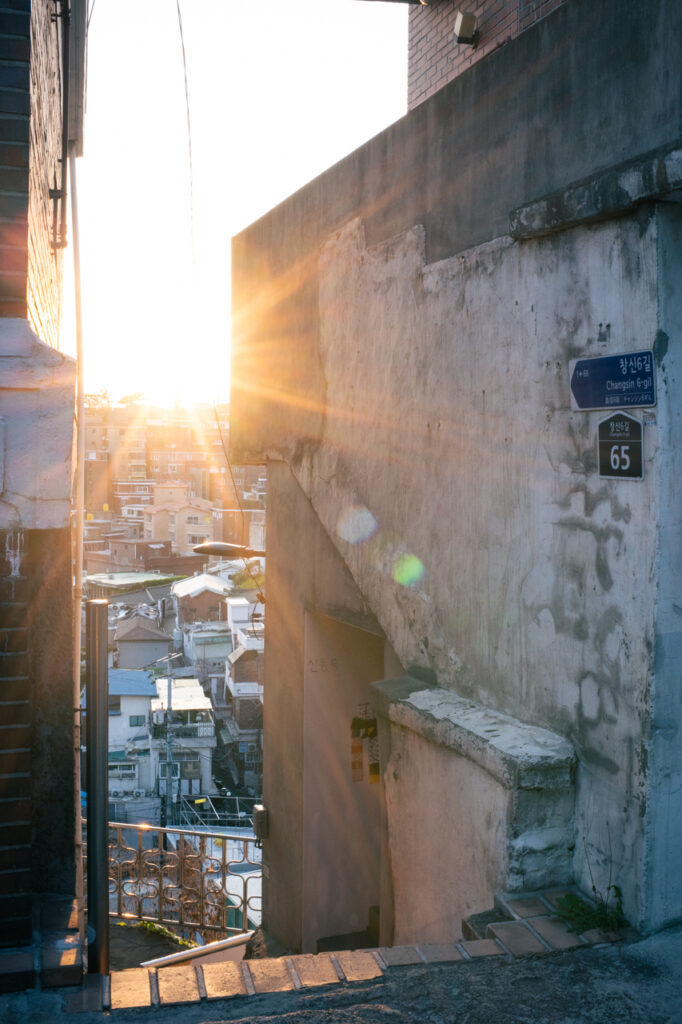
This is Changsin Cliff Village, where workers once carved stone that helped build the city. The quarry is long silent, but its presence remains—immense, gray, exposed. Around it, homes clutch the hillside, connected by staircases and alleys that weave like thread through cloth.
There are no plaques. No viewing platforms. Just a moment of sudden scale in the middle of the maze.
A cup above the rooftops
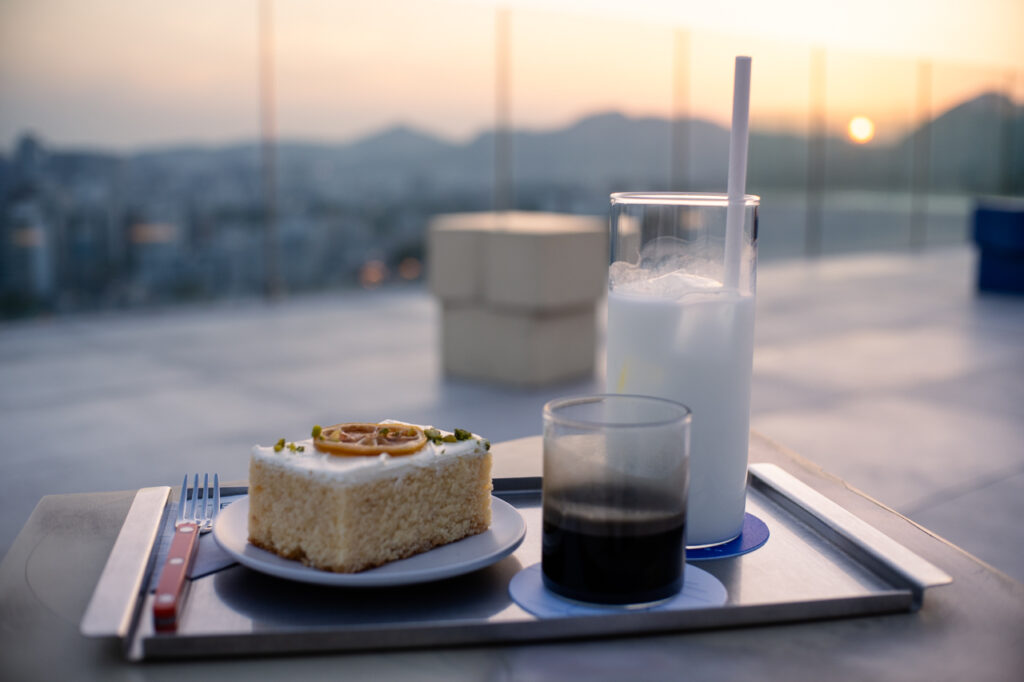
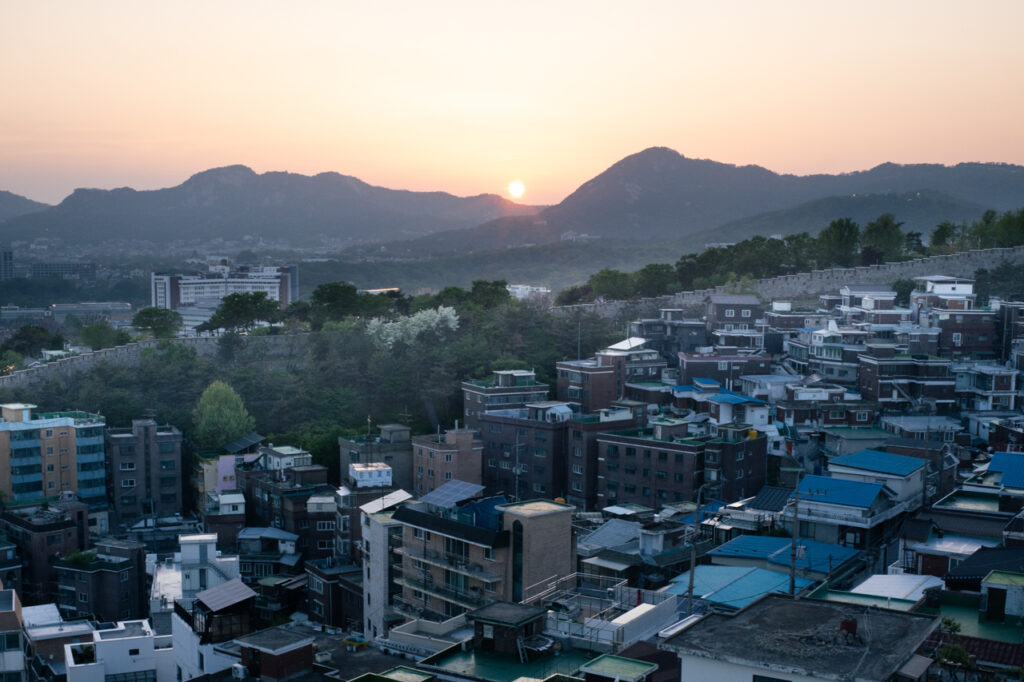
Climb further, past tiled roofs and the tangled backyards of old houses, and the view opens wide. A ridge holds cafés and restaurants—some new and polished, others improvised into homes.
You pick one. Order something hot, or cold. Sit near the window.
Below you: layers of rooftops, the market hidden beneath them. In the distance: the steel curve of Dongdaemun Design Plaza, and just behind it, Namsan Tower rising like punctuation.
It’s the kind of view you’d expect from a guidebook. But what brought you here wasn’t the view. It was the thread of the alley, the texture of the market, the echo of stone. A quiet place in a loud city. The kind of place that doesn’t ask for attention—but rewards it.
TTartisan 25mm F2 Street Photography Impressions
For a walk like this—narrow alleys, layered textures, sudden views—a pancake lens like the TTartisan 25mm F2 felt right. Paired with the A6400, it stayed light and low-profile, perfect for slipping through tight corners without drawing attention.
That said, the focal length itself—25mm on APS-C, or roughly 37.5mm full-frame equivalent—wasn’t ideal for Changsin. The alleys are tight, the turns are steep, and the vertical scale of the quarry demands a wider frame. A 24mm or 28mm equivalent would’ve captured more of the environment and made composition easier in such cramped quarters.
Regards to focusing, most of the time, I kept the aperture at F8 and relied on hyperfocal distance. That said, I had to check focus every time I pulled the camera from my jacket pocket, since the focus ring tends to shift around.
One thing to note is that street photography in Korea can be tricky. People are often cautious about having their faces photographed, and in traditional markets, some shopkeepers are especially sensitive. Practices that may not align with modern health codes—like unrefrigerated meat or open displays of raw ingredients—are tolerated locally, but not always welcomed on camera. You should always ask the owner before taking a photo, and be ready to accept “no” as an answer.
Getting There
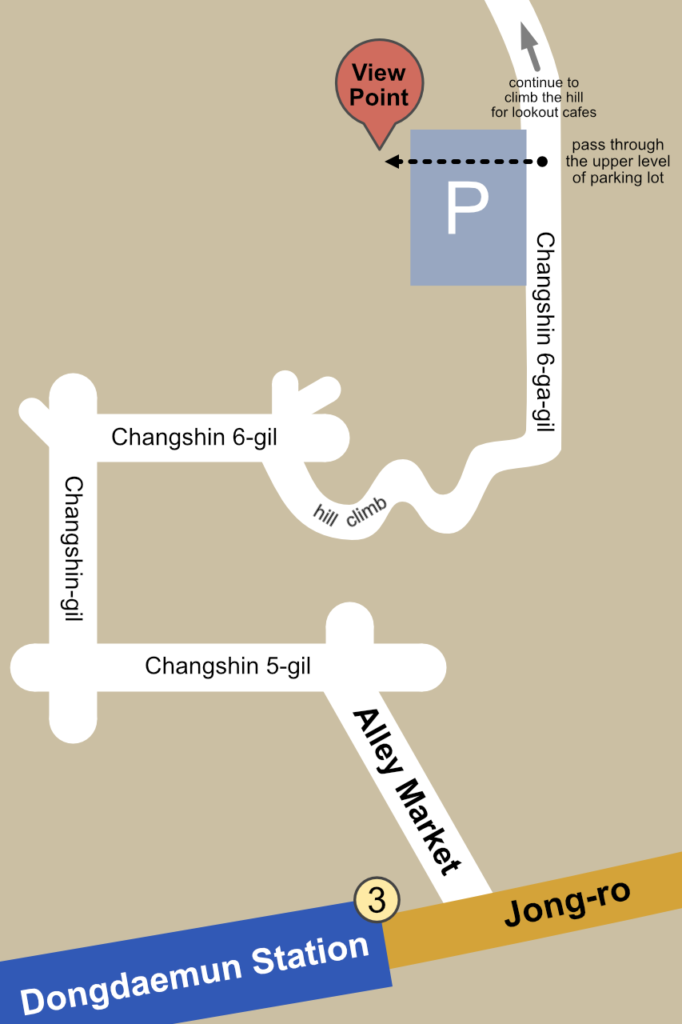
To reach Changsin Alley Market, take Line 1 to Dongdaemun Station (Exit 3) or Line 6 to Dongmyo Station (Exit 8). The market entrance is just a few steps from Dongdaemun Station Exit 3—look for the first alley next to Woori Bank. There’s a large sign in Korean at the entrance, but it’s easy to miss. The alley is narrow, so keep an eye out for scooters weaving through.
To reach the quarry and cafés, walk through the market and follow Changsin 6-ga-gil uphill. About halfway up, you’ll see a public parking lot. Behind it, a small staircase leads to the quarry cliff viewpoint. After taking in the view, backtrack and continue climbing to the top of the hill, where you’ll find several cafés overlooking the city.
A quick reminder: you’re walking through a residential neighborhood. Please respect the privacy of the locals and keep noise to a minimum.
This post was created with support from ChatGPT for research, writing, and planning.